Fully on chain · no IPFS · nothing to keep alive

Mint an NFT with your GPU.

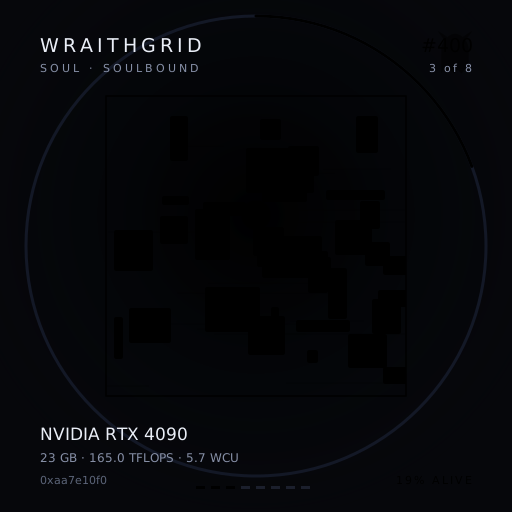
Put a machine on the grid and it mints a soul — generative art drawn from that hardware's own fingerprint, stored entirely in the contract, and redrawn from live state every time anyone looks at it. No two machines draw the same picture. There are only ever eight per device.

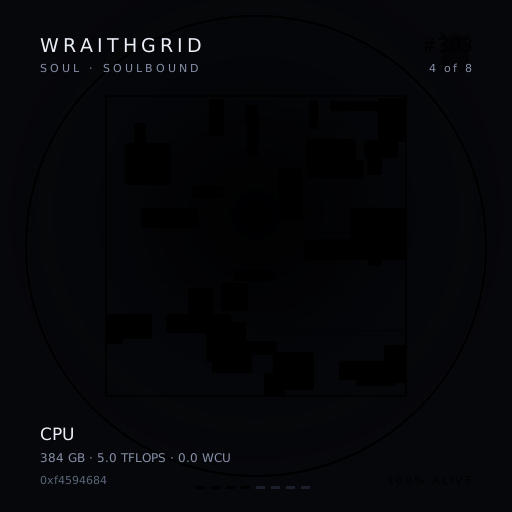
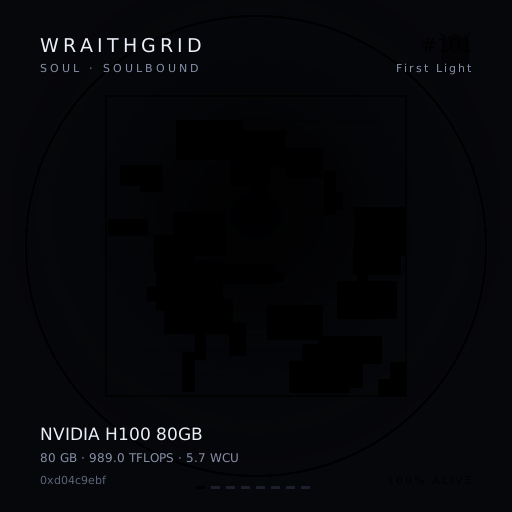
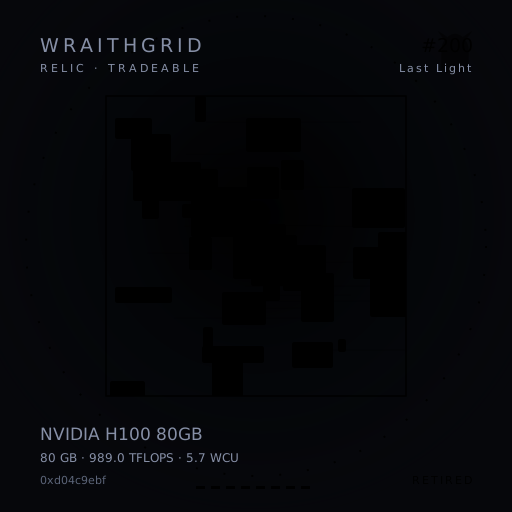
A WRAITHGRID soul for a CPU, drawn in violet A WRAITHGRID soul for an H100, first generation A retired WRAITHGRID soul, its liveness ring broken
Mint from a browser tab Mint from real hardware

Why it is drawn this way

The picture is the fingerprint.

The seed is the device id itself — the hash of the identity fields the probe pulled off your hardware. The same silicon always draws the same die, and no two cards draw the same one. It is not art about a machine; it is art from one.

It is alive

tokenURI is a view over live chain state, so the ring around the die is the 72-hour liveness clock draining in real time. A wallet showing a WRAITHGRID soul is showing whether that machine answered today. Let it lapse and the ring breaks.

It is entirely on chain

No IPFS pin to keep paid for, no gateway to go down, no metadata server. The SVG is generated by the contract on every read. If Monad is up, the art is up — which is the only durability guarantee worth making.

It is scarce by physics

Minting one means real hardware passed a timed proof of compute in front of an attestor, and locking a refundable deposit. You cannot mint a thousand from a script. Every soul in existence corresponds to a machine that actually existed.

What you are looking at

Every mark on it means something.

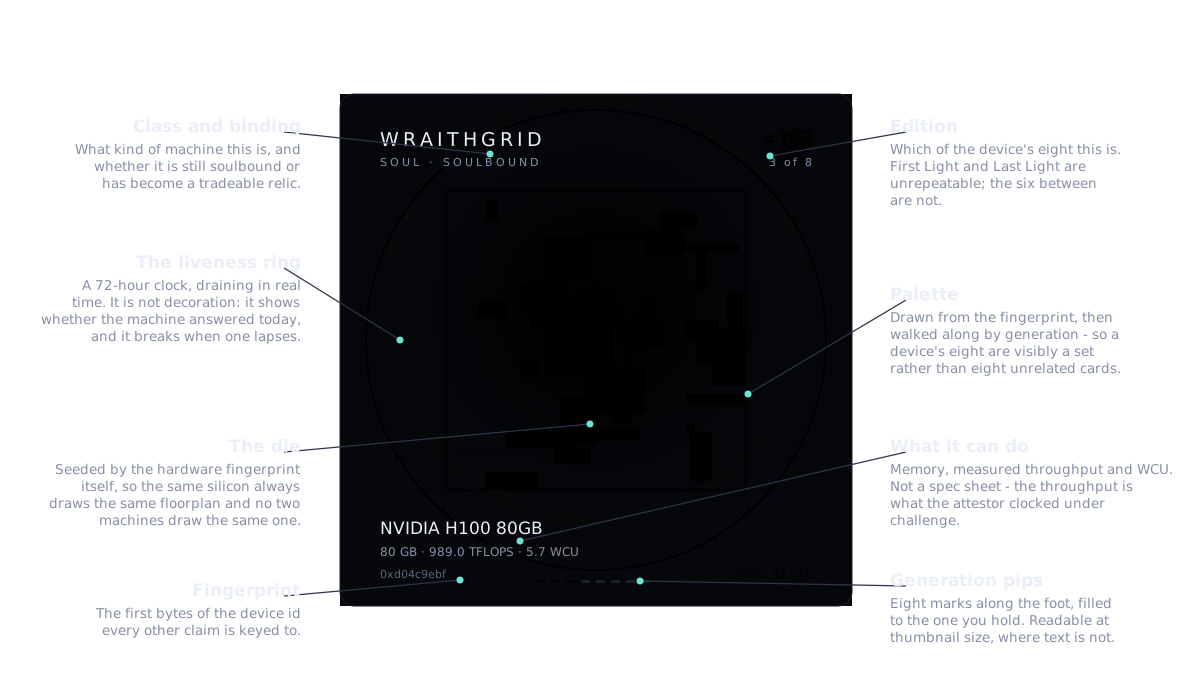
Nothing here is decoration chosen to look technical. Each element is a fact about the machine, read from the chain at the moment you open the token.

An annotated WRAITHGRID soul, with each element of the artwork labelled: class and binding, the liveness ring, the die, edition, palette, capability, generation pips and fingerprint

The traits

What each one is, and what makes it rare.

These are the attributes written into the token's metadata, so a marketplace shows the same things this page does. Rarity here is earned rather than rolled — there is no random trait table behind it.

TraitValuesWhat it means
Edition First Light · 2–7 of 8 · Last Light Which of the device's eight this is. The first a machine ever mints and the last it can are unrepeatable; the six between are ordinary. This is the scarcest thing on the card and the only one you cannot get back.
Class NVIDIA · AMD · Apple Silicon · CPU · Browser What kind of machine it is. Sets the palette family and, on chain, the reward multiplier. Browser souls are the most common by nature — anyone can mint one in a minute — and flagship accelerators the least.
Identity Verified · Attested · Declared How well the hardware's identity is pinned down, taken from which fields its probe actually produced. A CPU or a browser tab can never be Verified: they have no driver UUID to read. It is a permanent property of the token.
Status Alive · Lapsed · Relic The only trait that changes after minting, and it changes by itself. Alive redraws its ring every time you look; Lapsed means the machine stopped answering; Relic means the soul is spent and the token is freely tradeable.
WCU 0.00 – 13.12 Capability on one scale across every class, where 1.00 is roughly an RTX 4090. It is what the attestor measured under challenge, not a spec sheet figure, and it sets the deposit the mint costs.
Jobs kept a running count Work this hardware actually completed. It lives on the device rather than the token, so it survives retiring and re-enrolling — you cannot mint a clean sheet.
Fingerprint the device id The seed the whole picture is drawn from. Two machines cannot share one, which is why two souls cannot share a face.

A few of them

The same rules, four machines.

A first-generation H100 soul in teal
First Light, H100 Generation 1 of 8 — one pip lit. Verified identity, a full ring, 5.75 WCU. The rarest edition a device can produce, and only its first enrolment can.
A CPU soul in violet
A 384GB CPU node A different class entirely, and it says so rather than pretending to be a GPU. Declared identity, because a CPU has no UUID to read — visible on the card and priced for on chain.
A soul with its liveness ring nearly empty
Fourteen hours left The same art, later in the day. The ring is a real 72-hour clock — this machine has not answered in 58 hours and the token shows it. Nobody updated anything.
A retired soul, drained and with a broken ring
A relic The machine left the grid. The palette drains, the ring comes apart, and the token stops being soulbound — so this one can be sold, and it is the only way its hardware can ever come back.

The other token

A licence shows the slice you own.

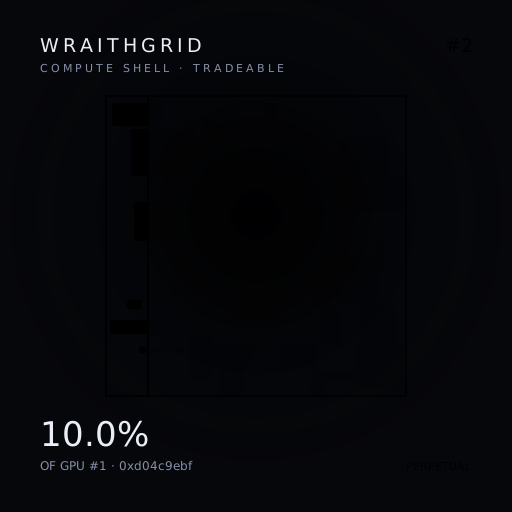
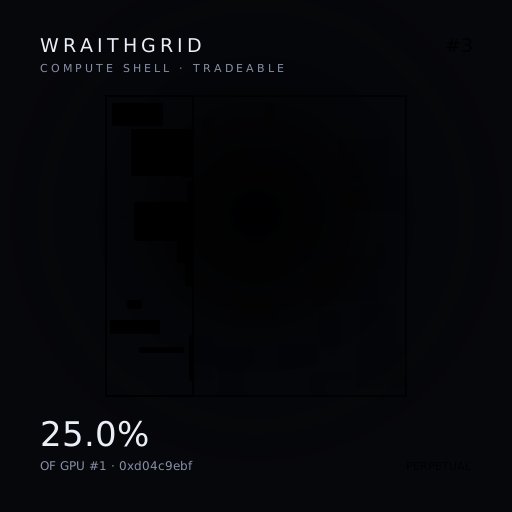
A compute licence is drawn from the same fingerprint as the soul it claims against — the same die, drawn again — but only the portion you actually own is lit. Buy 10% and a tenth of the die is awake; the rest is ghosted behind it.

A 10% compute licence, a tenth of the die lit
10%A tenth of the die is awake. The rest is somebody else's.
A 25% compute licence, a quarter of the die lit
25%The cap. A provider can never sell more than a quarter of one machine.

Your card has never had a face before.

Mint from a browser tab in about a minute with nothing installed, or put real hardware on the grid and let it earn while it holds the picture.

Minting locks a refundable deposit and requires a real proof of compute. Nothing is minted for a machine that does not exist.